


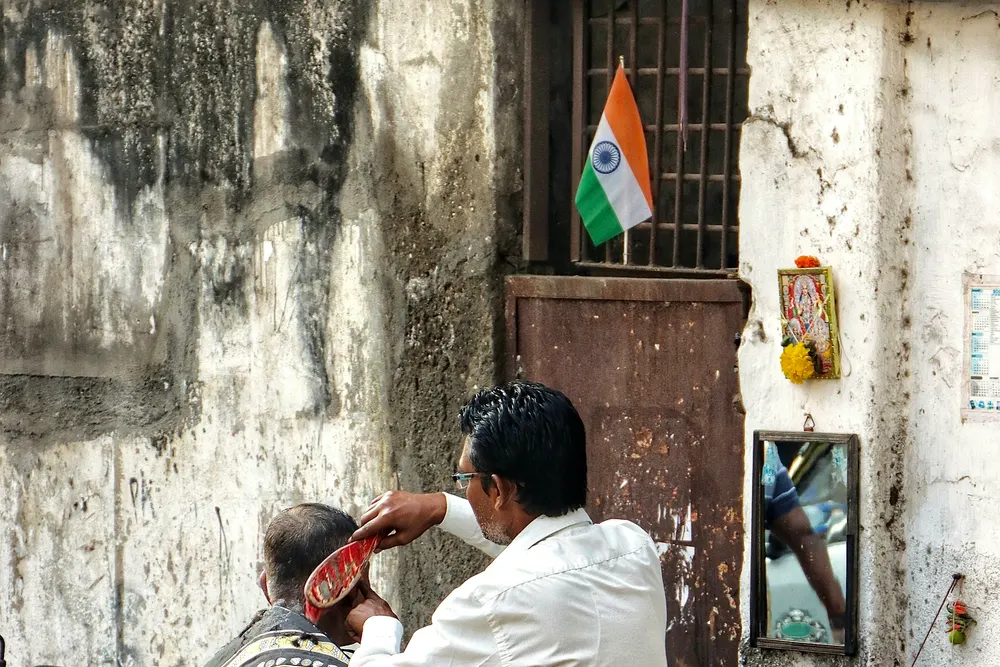
Dignity through decent work
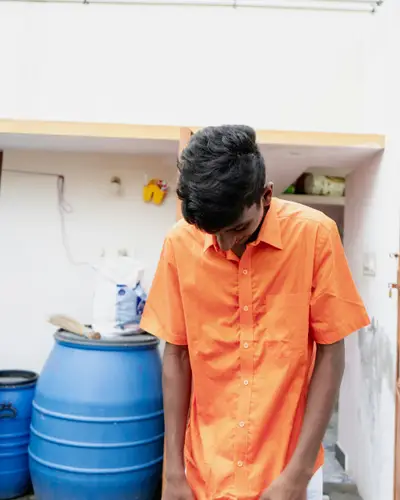
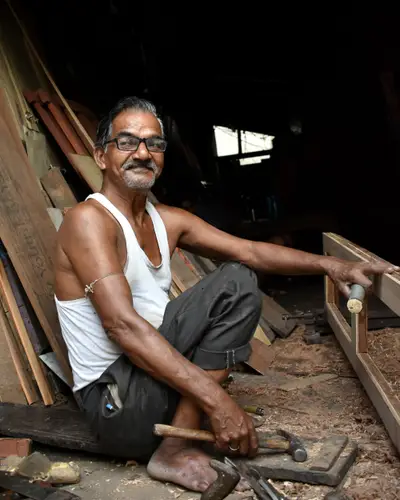
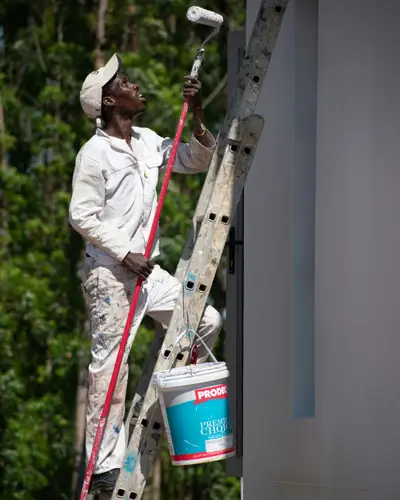
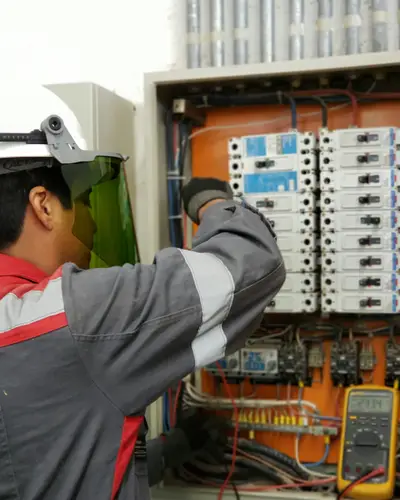
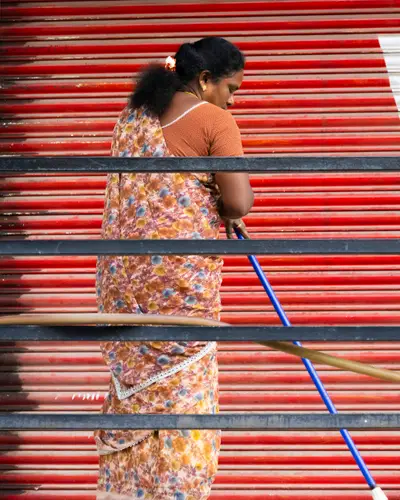
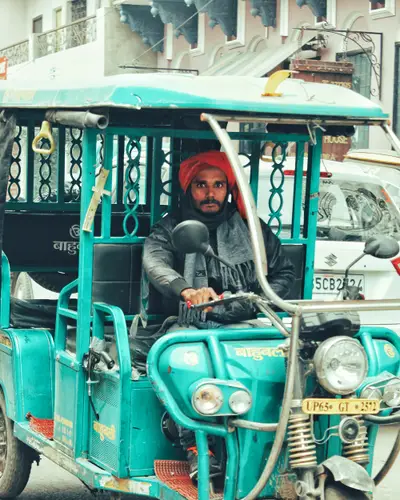
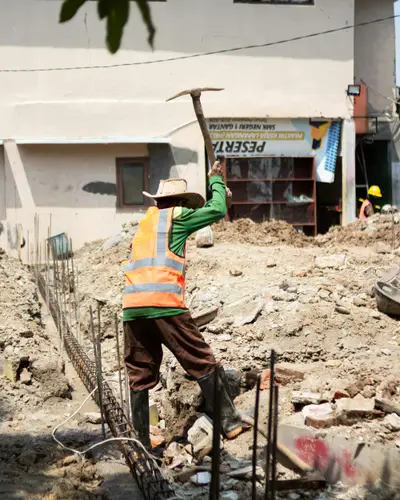
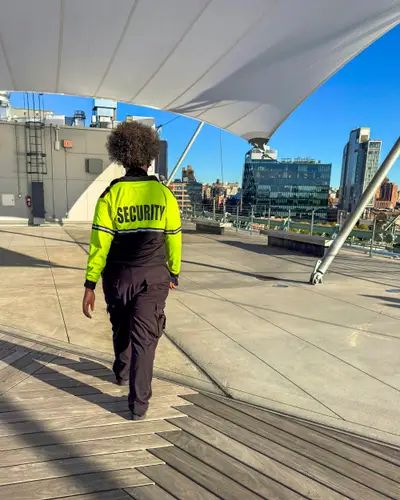
Workers in Ranchi, listed by trade and area. You call them directly, at a rate they set.

Two minutes, no fee, no papers
Register with your name, your number and the work you do. We put you in front of people hiring nearby.

Hire the person, not an agency
Their number is on the card. Nobody stands between you, and nothing is taken from their wage.

Twelve trades, open to register
Plumbing, wiring, masonry, painting, driving, daily-wage labour and more — for anyone who does the work.

Fair pay, and numbers to match
Every figure we publish is counted from the live database. Where we cannot measure something yet, we say so.
What needs doing?
Health
The cover a worker already has, and the one we add
A day lost to illness is a day’s pay. Most people on this platform are entitled to cover they have never claimed — we tell them which, at registration. The card we issue is for the smaller bill those schemes do not reach.
What we add
A free Digital Health ID, issued with the listing
Every worker who registers gets one — no application, no fee. It takes up to 25% off treatment at our partner clinics, and treatment is free where the need is there.
We hold no health records. We report IDs issued and never visits — the clinic software link is not built.
What the Health ID isWhat they are already owed
Government schemes, explained at registration
None of these is ours. Each is cover these workers are usually entitled to and often have not heard of.
- How to claim it— Ayushman Bharat (PM-JAY)
Government of India
Ayushman Bharat (PM-JAY)
Up to ₹5 lakh a year of free hospital treatment
- How to claim it— e-Shram
Ministry of Labour & Employment
e-Shram
A free card that puts a worker on the government’s list
- How to claim it— Mukhyamantri Abua Swasthya Suraksha Yojana
Government of Jharkhand
Mukhyamantri Abua Swasthya Suraksha Yojana
Up to ₹15 lakh a year, including families PM-JAY misses
We explain, we do not enrol. We describe these schemes in the registration conversation, and the pages are written so a worker can open them again afterwards, in Hindi, on their own phone. We file nothing on anybody’s behalf, we take no fee, and because we cannot verify an enrolment we report no figure for one.
Who can come
The case
Why this work matters
More than 9 in 10 workers in India are in informal employment — no written contract, no paid leave, and no social security tied to the job.
Source: Periodic Labour Force Survey, Ministry of Statistics & Programme Implementation
Over 30 crore unorganised workers have registered on e-Shram, the national database — a scale that shows the need, and a register that still does not find anybody a day of work.
Source: e-Shram, Ministry of Labour & Employment
- The problem
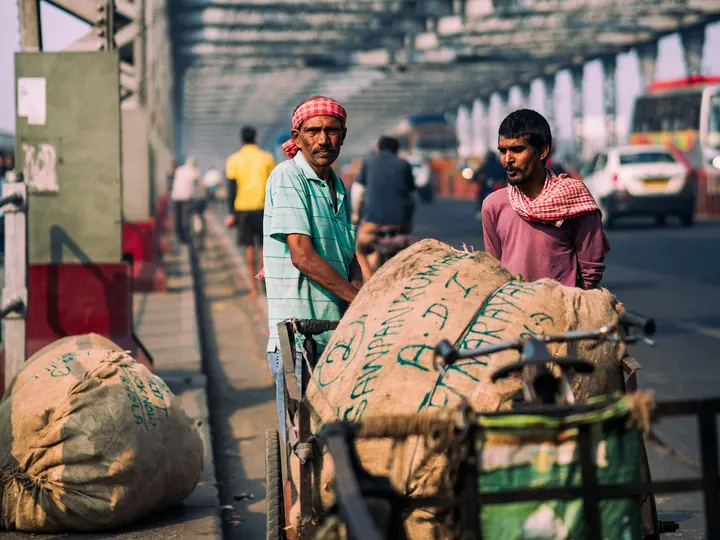
Work is found through a middleman, or not at all
A mason in Ranchi looking for the week’s work waits at a labour chowk or pays a contractor who takes a cut of the rate before it reaches him. Neither route leaves a record of the work, so nothing accumulates: no rating, no repeat customer, no history to show the next employer.
- What we do
A free listing, and the customer’s phone number
Registration takes a name, a number and a trade — no fee, no documents to start. The listing shows the worker’s own rate and their own phone number. The employer calls them directly. We are not in the conversation and we take nothing from the wage.
- What changes
The worker keeps the whole rate, and keeps the record
Every completed job can be rated by the customer, so a worker with no papers builds something an employer can read. That record belongs to them and moves with them; the listing can be paused or removed at any time, by them, without asking us.
- What it aims at
Steadier income, and a route into care
The intended outcome is repeat work rather than one-off work, and a first point of contact with healthcare: every worker who registers gets a free Digital Health ID, worth up to 25% off treatment at our partner clinics and free treatment where the need is there. What we cannot yet prove is how often it is used — the clinic software link is not built, so we report IDs issued and never visits we cannot count.
Feasibility
This is not a proposal. Open it.
The platform is built, deployed and serving. Rather than describe it, here are the parts of it you can use right now — and, underneath, the two things that genuinely are not finished.
- Register as a worker Verified by a code we email, in Hindi or English, no fee and no documents. Two minutes.
- The worker directory Filter by trade and by area, see rates and reply times, call the worker directly.
- The same thing in Hindi Every worker-facing route has a Hindi twin at a real, indexable URL — not a toggle.
- The Digital Health ID Enter a number, see the card. Live: up to 25% off treatment at our partner clinics, free where the need is there.
- The impact page, with its method Every figure, how it is counted, what is excluded, and what we cannot measure yet.
What runs behind it
- 12 trades and 10 Ranchi neighbourhoods, held as data rather than code
- Email-OTP sign-in, a listing lifecycle with an office review step, and two-way ratings
- An operations console for review, moderation and dispatch, and a separate console for workers
- Bilingual by construction: a missing Hindi string fails the build rather than shipping English
- 95 automated test suites, run against an isolated database, not the live one
- Runs on a single virtual server. The whole platform costs tens of dollars a month to operate.
What is not finished
An SMS channel
Sign-in codes are emailed, which works but asks a worker for an address they may not have. An SMS provider needs Indian DLT template registration and a funded account; until then, registration is finished and usable, but harder than it should be for somebody whose phone does not do email.
The clinic bridge
Care is live — a worker shows their Health ID at a partner clinic and the discount is applied there. What is not built is the software link back, so we can report how many Health IDs are issued but not how many visits they turned into. We list attended visits as unmeasured rather than estimating them.
Both are the funding ask further down this page. Neither is a software problem.
Innovation
Four things this does differently
Each one set against the convention it replaces, so the difference can be judged rather than taken on trust.
- Usually
Work platforms take 15–30% of what the worker is paid, and hold the customer’s contact details so the relationship cannot form without them.
No cut, and no middle
Nothing is taken from any wage, and the worker’s own number is on the listing. There is no billing code in this half of the platform to turn a fee on later — adding one would be building it from scratch.
- Usually
A worker’s rating lives inside the platform that issued it. Leave, and you start at zero again — which is what keeps people on terms they would otherwise refuse.
The record is theirs
The record of completed work belongs to the worker. For somebody with no contract, no payslip and no references, a public history of jobs done is the first portable proof of competence they have ever had. They can pause or remove the listing without asking us.
- Usually
Health access for informal workers is run as a separate programme, with its own clinics, staff and software — which is why most of them stop when the funding does.
The health half already exists
The health rail is an existing multi-tenant clinic system we already build and operate, in daily use by real clinics with real patients. Adding worker referrals to it is an integration, not an institution, so the marginal cost of the health half is close to zero and it does not end when a grant does.
- Usually
Impact pages report the best defensible number. A metric with no data source quietly becomes a zero, and a percentage over nobody becomes 0%.
Reporting that can say “we do not know”
This platform refuses to print a figure it did not count. A metric with no source is named as unmeasured with the reason, a percentage over an empty group renders as “—”, and when the server cannot be reached the figures do not render at all rather than showing zeros. The method is published beside the numbers.
Scalability
What it takes to do this in the next city
Four things that already make expansion cheap — and then the one that does not, which is the thing worth funding.
A new city is rows, not a release
Cities, neighbourhoods and trades are data. Ranchi has ten neighbourhoods and twelve trades because somebody entered them, not because anything was written for it. The second city ships without a deployment.
A new language is one file
English and Hindi are two real route trees over one dictionary, and the build fails if a Hindi key is missing rather than quietly showing English. A third language is a file and a proofread — which matters, because the next city may not read either.
The health rail is already multi-tenant
The clinic system carrying the Digital Health ID serves separate clinics on one deployment today. Adding a clinic in a new city is an onboarding, not a build, and it is the same work that system already does commercially.
The running cost barely moves
The whole platform — site, API, database, consoles — runs on a single virtual server for tens of dollars a month, and it is not close to its ceiling. Growth here is not paid for in infrastructure.
What happens when the funding stops
A platform that takes no commission earns nothing from the work it arranges, and that is a deliberate choice rather than an oversight — so the honest answer matters. The employment half is built to be nearly free to run: one server, no staff cost in the software, and no per-transaction expense, which means it survives a funding gap in a way a staffed programme does not. The health half is not charity infrastructure at all — it is a clinic product that already has paying customers, and the worker referral rides on it. Grant funding here buys reach and two integrations. It is not what keeps the lights on.
Where this goes
Built, blocked, and aimed at
Live now
LiveBuilt and in use
- Every trade and neighbourhood listed above is open, with workers registered in it.
- Free registration by phone in Hindi or English — no fee, no documents to start.
- Workers publish their own rate. Enquiries reach our office first and are checked before a worker is given the job.
- Ratings on completed jobs, and a public impact page counted from the live database.
- A free Health ID issued to every worker at registration — up to 25% off treatment at partner clinics. Visits are not yet measured, so we report IDs issued and not care delivered.
By Dec 2026
What is blocking growth today
- An SMS channel, so a sign-in code reaches a worker on any handset, not only by email. Everything else in registration is built and waiting on this.
- The clinic bridge with our partner clinics, turning a recorded Health ID request into a visit somebody can actually attend — and into the first outcome we can count.
- Registration in person at the labour chowks and markets, where the work is actually found.
By Mar 2027
TargetsTargets, not achievements
- Target 500 · Mar 2027: real active worker listings.
- Target 1,000 · Mar 2027: jobs requested through the platform and marked done.
- Target 200 · Mar 2027: Digital Health IDs issued to registered workers.
- Independent review of how these figures are counted, published alongside them.
What a grant would pay for
The platform is built and running. What is missing is not software — it is the people doing registration in person, and the two integrations that turn a registration into work and into care.
Registering workers in person
Field registration at the labour chowks and markets, in Hindi, reading the form out loud and staying until the listing is live. It is the slowest part of the programme and the part that decides who is on it.
The SMS channel
Sign-in codes currently depend on a channel we have not funded. Registration, the listing flow and the worker console are all built and all sit behind it.
The clinic bridge
Connecting registrations to our partner clinics so a Health ID becomes an appointment. Until this exists we report requests and openly list attended visits as unmeasured.
Verification of what we report
An external check on the counting method behind the impact page, published with it. We would rather fund being checked than fund a larger claim.
Who is behind this
Built and funded by two people
What has already been delivered
This platform, end to end
Site, API, database, the operations console and the worker console. Twelve trades, two languages, ninety-five automated test suites, deployed and serving.
The clinic system the Health ID rides on
A multi-tenant clinic and records platform in daily use by real clinics with real patients. It is why the health half of this programme is an integration rather than an institution that has to be founded first.
The infrastructure under both
One virtual server, self-managed — web, application, database, caching, backups and deployment. No platform team, and no per-service bill that grows with the mission.
The obvious risk, stated plainly: two people are still a thin bench, and it is the main thing a funder should weigh against everything above. What reduces it is that the platform is documented, automatically tested and cheap to run rather than dependent on constant attention — and that the first thing growth funding buys is people doing the registration work, which is where the next pair of hands is genuinely needed.
Health
A free Digital Health ID, issued to every worker who registers
Up to 25% off treatment at our partner clinics — dental and eye care, both already running on VIXIT AI — and free treatment where the need is there. The clinic software link is not built, so we report IDs issued rather than visits we cannot yet count.